What is tempered glass and why is it used for doors and partitions?
Ordinary glass is heated to a high temperature and cooled rapidly, which builds compressive stress at the surface and improves its resistance to impact and bending. The result is glass several times stronger than ordinary glass of the same thickness, and when it breaks it crumbles into small, relatively blunt granules. That is why it is used wherever people touch glass: doors, partitions, showers and tabletops. It is not unbreakable; a hard knock on the edge can break it, as we explain in the complete guide to tempered glass. It also differs from heat-strengthened glass, a separate product with different strength and breakage behavior; for a comparison see the glass types guide.
Who do we supply tempered glass for in Riyadh?
- Villas and apartments: interior doors, partitions for majlis and lounges, shower enclosures, tabletops and shelves.
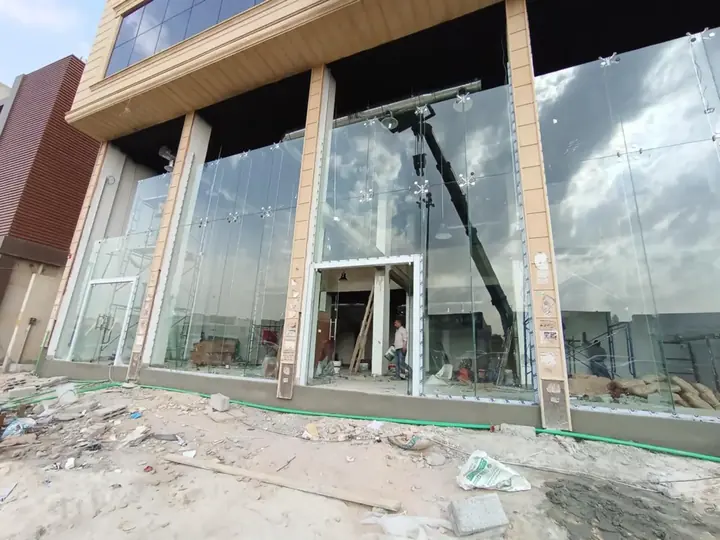
- Shops and showrooms: glass entrances without heavy frames that show off the display, with hinged or sliding doors.
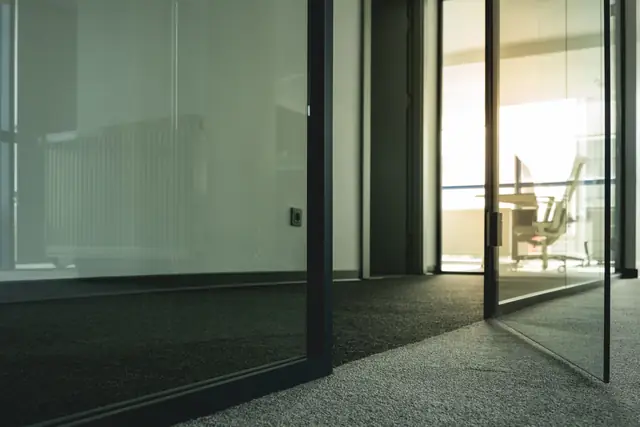
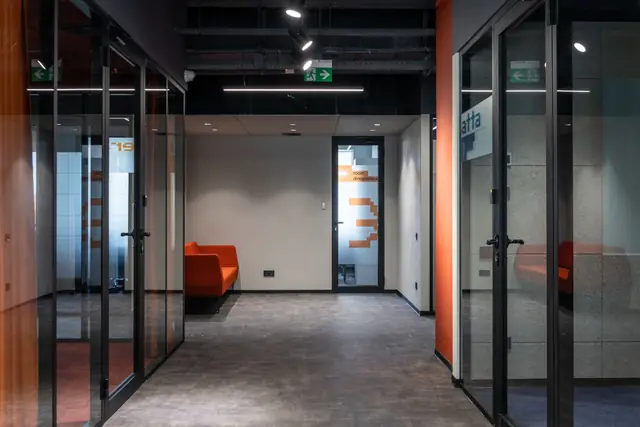
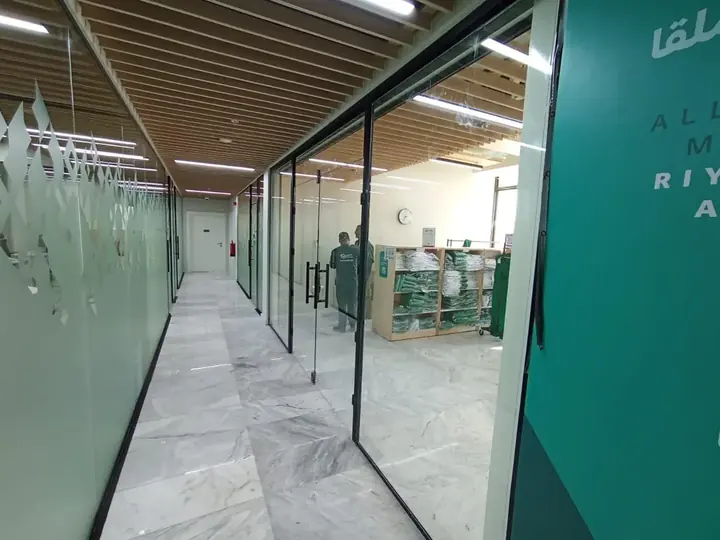
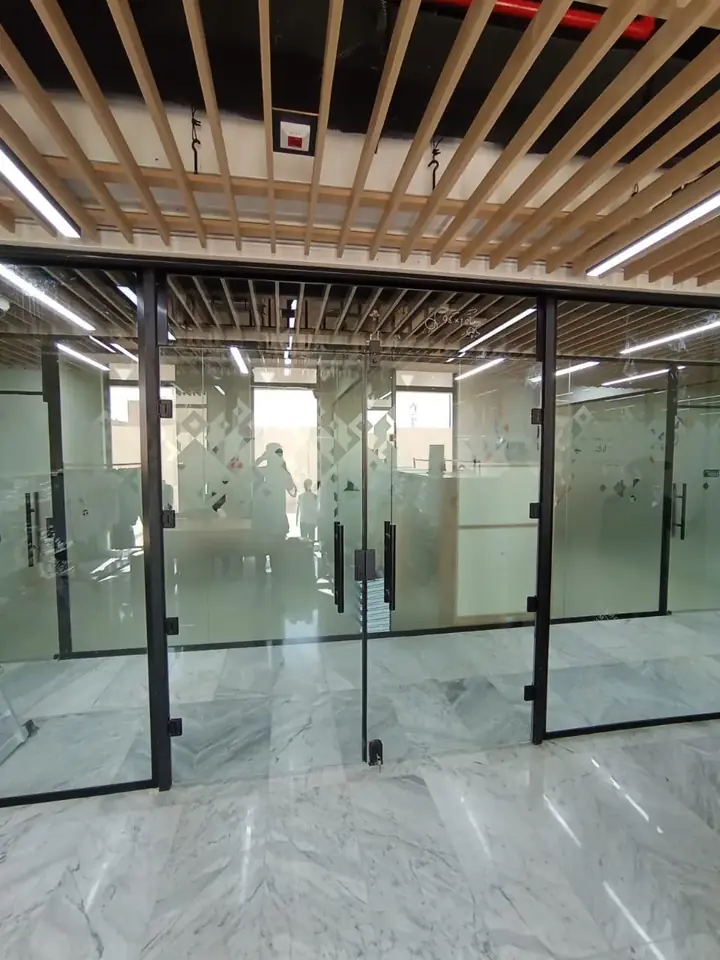
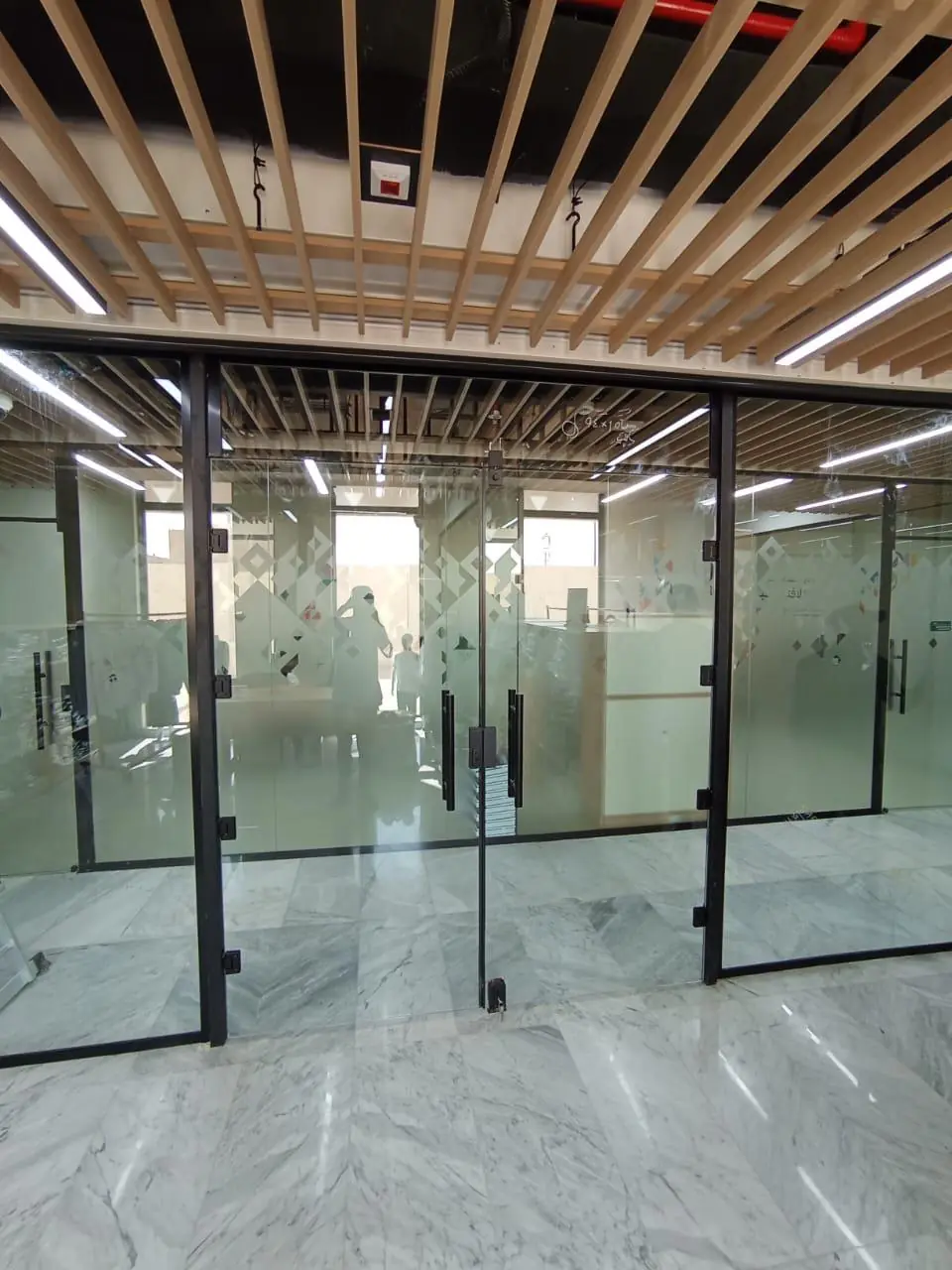
- Offices: doors and partitions that bring in natural light and can be reconfigured later, covered by our glass office partitions service.
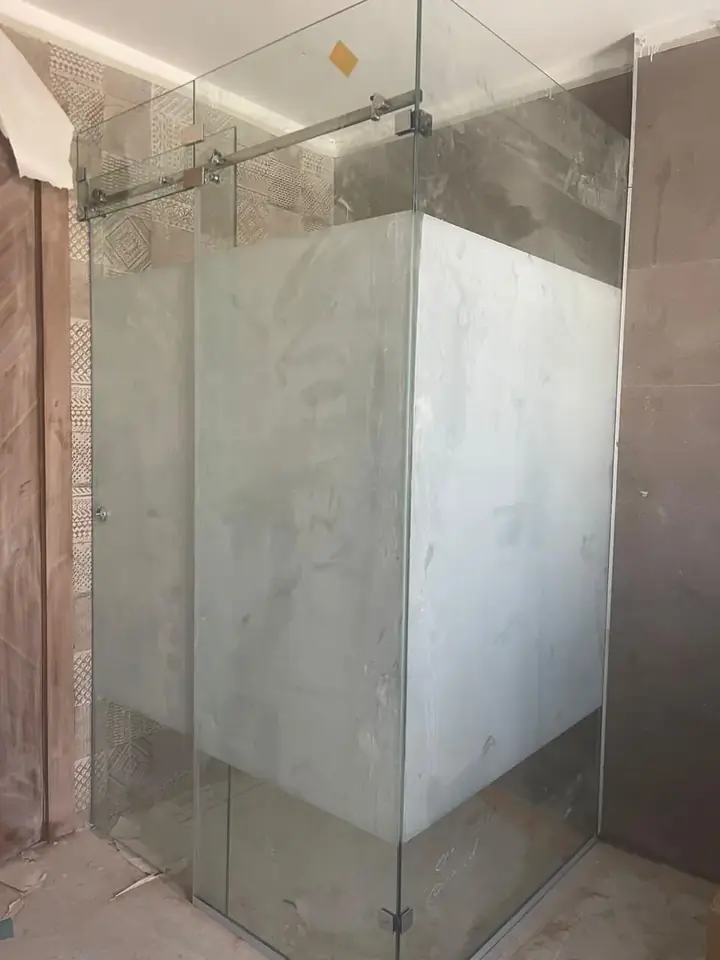
- Bathrooms: tempered shower glass with hardware that withstands humidity and hard water, detailed on our shower enclosures page.
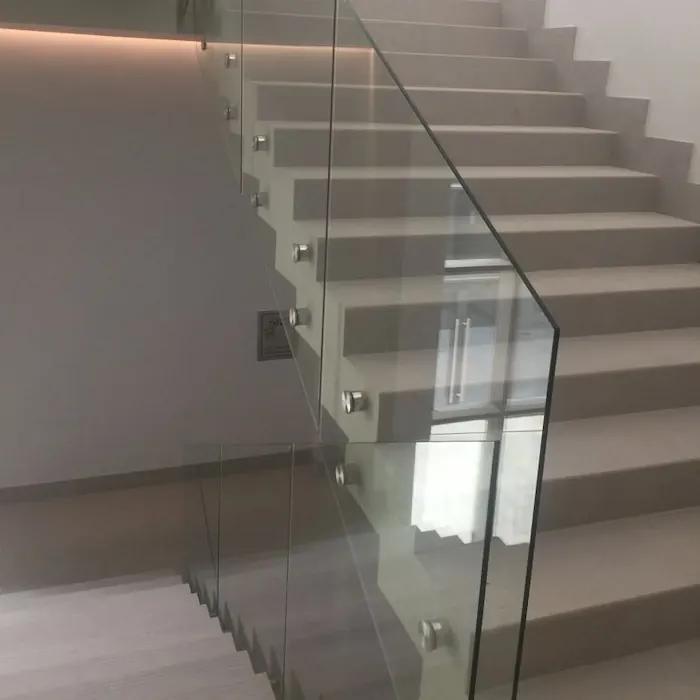
- Special structural work: facades, railings and glass roofs, which are settled by an engineer's calculation and the licensing authority's requirements, never by guesswork.
What are the common tempered glass door and partition systems?
| System | Suits | Note |
|---|---|---|
| Hinged door with glass hinges | Interior rooms, bathrooms and offices with moderate use | Performance depends on hinge capacity and door weight |
| Door with patch fittings and floor spring | Busy shop and office entrances | Needs a concealed box in the floor and precise pivot positioning |
| Sliding door on an overhead track | Spaces too tight for a swing, lounge dividers | Track needs periodic cleaning and a side wall to slide along |
| Fixed panel | Shopfronts, light-borrowing and visual separation | Fixed in channels or clamps depending on height |
| Aluminium-framed partition | Offices and shops needing faster installation and more tolerance for uneven walls | The frame is visible but protects the edges |
What finishes and types are available?
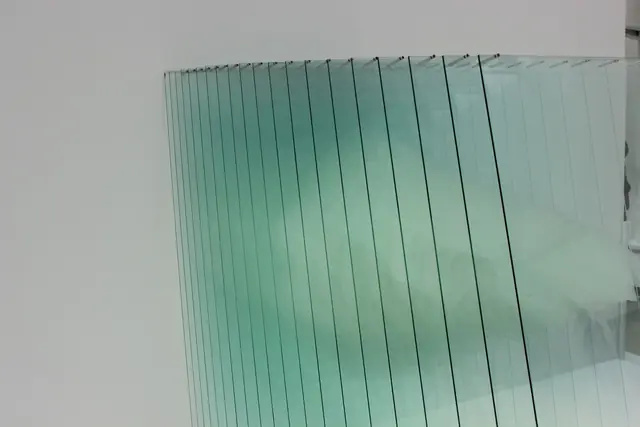
- Clear: the most common, bearing in mind the green edge shows more in thicker glass.
- Tinted or bronze: reduces glare and coordinates with the decor.
- Frosted or printed: for privacy in bathrooms and offices; see the privacy glass guide for options.
- Laminated tempered: two tempered panes with an interlayer, where more cohesion is needed after breakage, as in the laminated glass guide.
- Custom sizes and cut-outs: holes and notches for handles and locks are defined before tempering, not after.
How do I choose the right tempered glass thickness?
| Thickness | Common uses | What affects the decision |
|---|---|---|
| 6 mm | Shelves, small tops and panels inside a frame | Not an option for frameless doors |
| 8 mm | Framed or semi-framed showers and small sizes | Size and fixing method |
| 10 mm | Doors, office partitions and frameless showers | Door weight, width and hardware |
| 12 mm and above | Large doors, tall partitions and special designs | Height, use and structural calculation |
How do I decide thickness and type before ordering?
The thicknesses in the table are guidance only, and the final decision is made after measuring on site. Thickness depends on the panel's width and height, the fixing method, the hardware, how often it is used and whether it is indoors or outdoors, not on price alone. For more, see the glass thickness guide; for hardware, the guide to hinges, patch fittings and floor springs; and to choose between systems, the sliding versus hinged comparison. For higher-risk uses such as height, railings and roofs, a structural engineer and the licensing authority set the requirements.
What factors determine the price of tempered glass?
- Glass type and thickness, and whether it is clear, tinted, frosted or laminated.
- Area, number of pieces and special sizes.
- Edges, holes, cut-outs and printing.
- Hardware type, material and finish.
- Height, access, elevator availability and installation conditions.
- Project location, transport and associated works.
How is your order carried out, step by step?
- Site measurement: we visit your site in Riyadh and take more than one measurement per opening, because walls are rarely perfectly straight. To prepare, see the measuring guide.
- Written, itemised quote: it states thickness, type, hardware and installation, so you can compare clearly.
- Fabrication to size: the glass is cut, drilled and edge-finished before tempering, because it cannot be modified afterwards.
- Installation: by our team, with fixing suited to the wall and floor type, floor protection and cleaning after the work.
- Handover: we test opening and closing and check alignment and gaps with you before closing the order. The stages are explained in the stages of a glass project.
What are the common mistakes when ordering tempered glass?
- Ordering from approximate sizes: tempered glass can't be cut afterwards, so any error means a new panel.
- Choosing thickness by price alone without considering size and hardware.
- Ignoring hardware: a hinge weaker than the door's weight makes the door sag and stresses the edge.
- Neglecting the edge: it is the weakest point and must not knock against metal or the floor.
- Not checking the wall and floor before installation, so rubbing shows up later.
- Not asking about rare spontaneous breakage and how it is managed, explained in the nickel sulfide article.
How do I maintain and clean tempered glass?
- Wipe with a soft cloth and a non-abrasive glass cleaner, and avoid sharp tools and rough materials.
- Dust builds up quickly in Riyadh, so wipe it before it turns with humidity into a layer that is hard to remove. Hard water leaves limescale, covered in how to remove limescale.
- Check hinges, handles and tracks periodically and tighten them when needed, and don't hang weight on the door.
- If a panel breaks, keep children away and clean up carefully; see what to do when glass breaks. For child safety, see the family guide.
- For a general schedule, see the glass and aluminium maintenance guide.
What do we need from you for an accurate quote?
- The intended use: door, partition, shower, tabletop or facade.
- Clear photos of the space and approximate dimensions (width and height).
- The project location in Riyadh, and whether it is indoor or outdoor.
- The wall, floor and ceiling type it will be fixed to.
- The privacy level, finish and preferred colors.
- Suitable installation timing and any access or operating restrictions.
What questions should you ask any tempered glass supplier?
- Does the quote cover measuring, fabrication and installation, itemised line by line?
- What glass thickness, type and hardware are specified, and why were they chosen?
- Is the glass truly tempered and compliant with a recognized standard such as EN 12150 or ASTM C1048, per the manufacturer? Ask for proof.
- How is any change charged if dimensions differ at installation, and who bears it?
- How are edges treated, and how is rare spontaneous breakage handled? See also the contractor checklist.
- What is the lead time, and how are acceptance and handover done?
Summary
Tempered glass is a practical and relatively safe choice for doors, partitions and showers once thickness and hardware are settled after an accurate measurement. Ask for a site measurement in Riyadh and an itemised written quote, and compare line items rather than a single number. If your project is a facade or a high-risk elevation, see our glass facades service or glass railings, where requirements are set by an engineer's calculation and the licensing authority.
How we work
Get in touch
Send us a photo and a short description on WhatsApp.
Visit & measure
Our technician visits your site and takes the measurements.
Written quote
Materials, timeline and price in writing before any fabrication.
Fabricate & install
We build, install and leave your site clean.
We don't publish a generic price per metre: every project differs in thickness, hardware and installation, so we give you a written quote after the site visit.
FAQ: Tempered Glass
Is tempered glass unbreakable?
No. It is stronger than ordinary glass, but a hard impact, especially on the edge, can break it. The difference is that it crumbles into small pieces that are less dangerous than large shards.
Can tempered glass be cut or drilled on site?
No. Cutting, drilling and finishing happen before tempering, which is why we measure precisely on your site before fabrication.
Which thickness should I choose for an office or shop door?
Usually 10 mm or 12 mm, depending on width, height, frequency of use and hardware. This is guidance only, and we confirm after the site visit.
What is the difference between tempered and laminated glass?
Tempered is a single heat-treated pane. Laminated is layered with an interlayer that holds pieces together after breakage, and the two can be combined (laminated tempered) where higher safety is needed.
Can tempered glass break on its own?
Very rarely. Causes can include microscopic inclusions such as nickel sulfide or edge damage. We explain it without exaggeration in a dedicated article, and we ask the supplier how it is managed.
How long does the work take?
It depends on the number of pieces, the finish and hardware availability. We state the timeline in our written quote after measuring, and we don't promise one before the site visit.
Is tempered glass suitable for outdoor use and Riyadh's heat?
Generally yes, with correct fixing and suitable gaskets and sealant, and allowance for thermal expansion. For facades and heights, an engineer sets the requirements.
How do I request a quote?
Send us photos, approximate dimensions and your location on WhatsApp. We arrange a site visit and measurement, then send an itemised written quote.