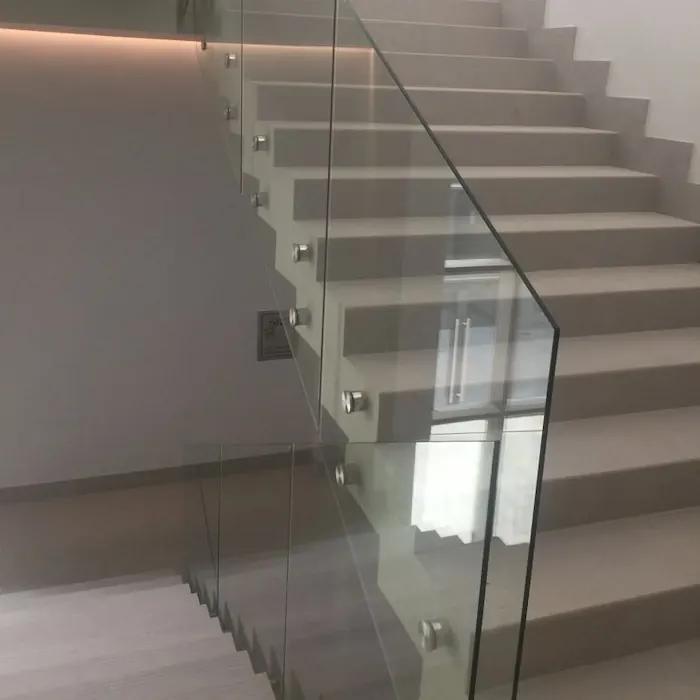
What is a glass railing, and why can't it be chosen by looks alone?
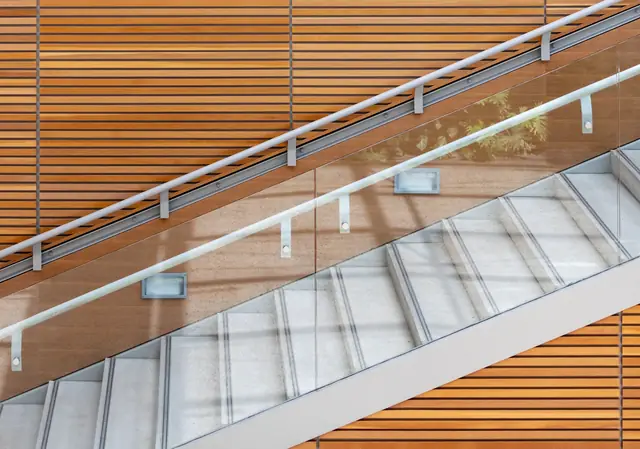
It is a barrier of glass panels fixed to a staircase, balcony or raised edge that guards against falls while keeping views and light open. Because people lean on it or knock into it, it is a safety element before it is decor. So it must not be settled by appearance or the lowest price: the glass type, build-up, barrier height, fixing method and the strength of the floor or edge it is fixed to all vary with the site, the use and the licensing authority, and they are decided by the qualified engineer and the licensing authority, not by the supplier or by taste. Our role is to measure, fabricate and install precisely what is approved. For more depth, read Glass balustrade: laminated or tempered?.
Who do we supply glass railings to in Riyadh?
- Villas: indoor stair railings, void edges and entrance stairs, keeping the hall open and bright.
- Apartments and repeated floors: balconies and terraces that need a barrier that keeps the view, bearing in mind the effect of dust and sun.
- Shops and showrooms: mezzanine stairs and internal floor edges with a clean look.
- Offices and complexes: stairs and double-height reception areas, which are often subject to stricter requirements because they are public.
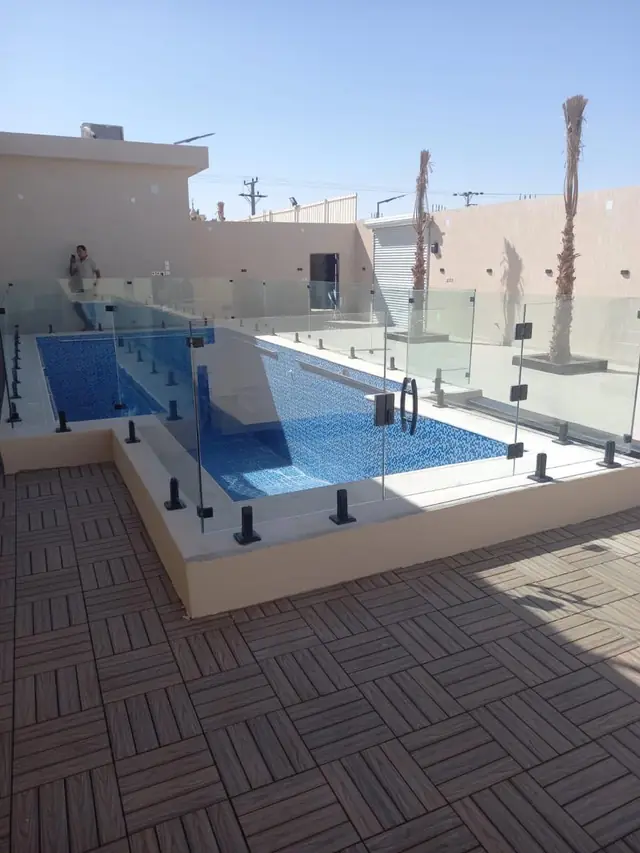
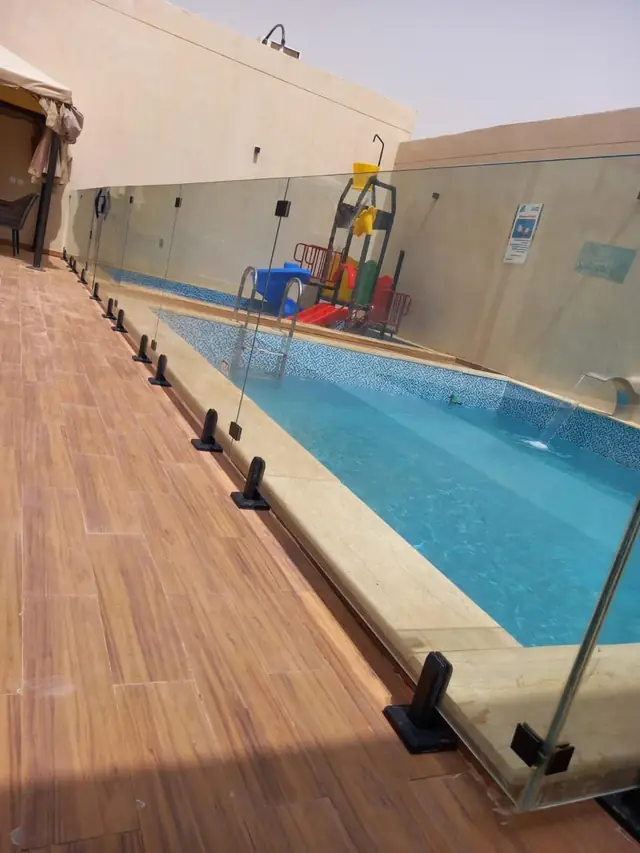
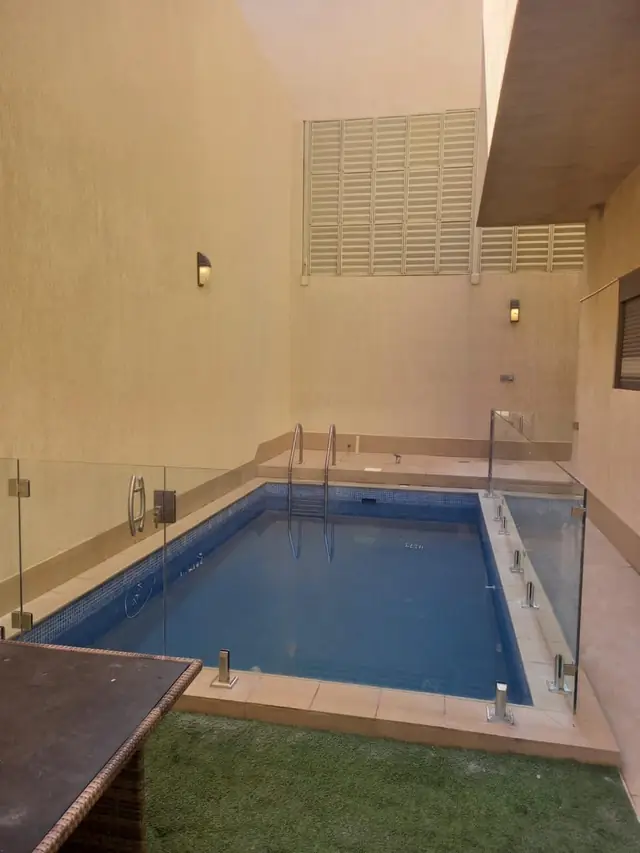
- Pools and outdoor roofs: more exposure to water, heat and chemicals; the details are in Pool and outdoor balcony railings.
What are the common glass railing systems?
| System | Suited to | Note |
|---|---|---|
| Glass with a top handrail | Stairs and balconies where a handrail feels reassuring | The handrail shares load and ties panels together; confirmed by the engineer's calculation |
| Frameless (no handrail) | A pure look with no visual barrier | Needs a stronger build-up, bases and structural design; requirements differ between authorities |
| Base shoe or channel fixed to the floor or edge | Frameless systems and balconies | Depends on concrete strength, edge distance and how it is cast |
| Point fixing (spigots or standoffs) | A light look with metal points | Stresses concentrate at the fixing points, so calculation matters even more |
Laminated or tempered: which suits a railing?
Tempered glass is stronger than ordinary glass, but when it breaks it crumbles into small pieces that can fall from height. Laminated glass is two or more layers with an interlayer that holds the glass together after breakage, so the barrier does not give way at once. That is why laminated glass made from tempered or heat-strengthened layers, depending on the design, is preferred where there is a fall risk, as explained in the laminated glass guide. Remember that heat-strengthened glass is a different product from tempered. Technical sources say single-layer tempered glass should not be relied on alone in frameless systems, but the final call belongs to your engineer and the licensing authority, not to us. To understand tempered glass itself, see our tempered glass page.
How do you choose glass thickness and build-up?
- There is no ready-made number: thickness and build-up depend on panel length and height, the fixing system, whether there is a top handrail and the building type, and they come out of the engineer's calculation.
- A general principle, for guidance only: the less support around the glass (frameless or point fixing), the heavier the build-up and the more careful the design needed.
- Public places and greater heights are usually stricter than a home, so never copy specifications from one project to another.
- The thickness guide explains general concepts in Which glass thickness for each use?, but it does not replace the calculation for your project.
- Final decision after measuring and approval: this is guidance only, and we do not fabricate before the engineer approves the specification.
What affects the price of a glass railing?
- The glass type and build-up (laminated or other), plus the number and area of panels.
- The fixing system: top handrail or frameless, and bases, channels or point fixing.
- The metal type and finish, and its resistance to humidity, salt and chemicals.
- The shape: straight runs, stepped stairs, corners, curves and special cut-outs.
- Site condition: ready or needing floor preparation, plus access difficulty and working height.
- The licensing authority's requirements and the calculations and drawings they call for.
- The time needed. For more, see How is glass priced?. We give you the price in writing, item by item, never verbally.
What are our steps from measurement to handover?
- Site visit and measurement in Riyadh: we measure heights, lengths and angles and inspect the floor or edge the railing will be fixed to.
- Written, itemised quote: covering glass, fixing, metalwork and installation so you can compare clearly with any other offer.
- Fabrication to size: glass is cut, drilled, edge-finished and heat-treated or laminated before delivery, so nothing is altered afterwards.
- Installation: we fit the panels, bases and handrail per the engineering approval and clean the site.
- Handover: we review the work with you and explain care, and the stages are laid out in Stages of a glass project.
What are the common glass railing mistakes?
- Choosing the glass and fixing by looks or lowest price without an engineering calculation.
- Copying a railing style from another project without checking it suits your site and licensing authority.
- Guessing base positions without checking the strength of the floor or balcony edge.
- Measuring before floors and finishes are complete, so dimensions change; see How to measure for glass.
- Neglecting the metal in humid areas or near pools, where stains and rust appear easily.
- Leaving child safety until after installation; see Glass in the home and child safety.
How do you look after a glass railing?
Clean the glass with a soft cloth and a non-abrasive cleaner, and avoid harsh chemicals that can affect edges or the laminated interlayer. In Riyadh dust builds up quickly, so regular wiping is easier than removing a thick layer. For limescale from hard water, safe methods are in Removing limescale from glass. Metal needs fresh-water rinsing and regular cleaning, especially near pools, and a more corrosion-resistant stainless grade may be recommended in humid conditions, as discussed in 304 or 316 stainless steel. Inspect fixings and bases by eye from time to time, and if you notice a crack in the glass or unusual movement in the railing, keep away from it, avoid leaning on it and have it checked at once.
What do we need from you to quote accurately?
- The project location and where the railing goes: indoor stair, balcony, roof or pool area.
- Clear photos and approximate dimensions, or drawings if available.
- The floor type and the concrete or stair edge, and whether finishes are complete.
- Your preferred system (with or without handrail) and any preference for metal or colour.
- The building type (residential, commercial or public) and any requirements from the licensing authority or engineer.
- The date you need it done; we confirm everything at the site visit.
What questions should you ask any glass railing supplier?
- Will the build-up and fixing be approved by a qualified engineer and the licensing authority?
- What type of glass is it, is it laminated, and what is it made of?
- What fixing system is used, and what will it demand of my floor or balcony edge?
- What metal and finish, and does it suit humidity or a pool nearby?
- Is the quote written and itemised, including installation and cleaning?
- What happens if the actual size differs when measured? See How to choose a glass and aluminium contractor.
Summary
A glass railing combines an open view with a protective function, so it is built on calculation, not appearance. Request a site visit in Riyadh and make sure the engineer and the licensing authority approve the glass type, build-up and fixing; we then handle measurement, fabrication to size, installation and handover with a written, itemised quote.
How we work
Get in touch
Send us a photo and a short description on WhatsApp.
Visit & measure
Our technician visits your site and takes the measurements.
Written quote
Materials, timeline and price in writing before any fabrication.
Fabricate & install
We build, install and leave your site clean.
We don't publish a generic price per metre: every project differs in thickness, hardware and installation, so we give you a written quote after the site visit.
FAQ: Stair Railings
Is tempered glass enough for a railing?
Not always. Laminated glass is preferred where there is a fall risk because it stays together after breakage, but the final decision by building and system rests with the engineer and the licensing authority.
Do I need a top handrail, or can I go without?
It varies with the licensing authority, building type and structural design. A handrail shares load across panels, and without one the glass and fixing requirements rise; an engineer's calculation settles it.
What glass thickness is right for my railing?
We do not give a number before the visit. Thickness and build-up depend on panel size, the fixing system and use, and come from an engineer's calculation and the licensing authority's requirements.
What railing height is required?
Required heights vary by licensing authority, building type and location, so we settle them with the engineer before fabrication and never rely on a generic figure.
Are glass railings suitable for balconies and pools?
Yes, with a suitable system and build-up. Outdoor spots face heat, dust, humidity and chemicals, so the metal and finish matter as much as the glass, subject to the engineer and licensing authority.
How long does the work take?
It depends on sizes, the system, site readiness and approval of the calculations. We set the timeline after the visit, within the written quote, and give none before seeing the site.
How do I clean a glass railing?
Use a soft cloth, water and a non-abrasive cleaner, avoid harsh chemicals, and rinse metal regularly with fresh water. Limescale can be handled with safe methods that do not damage edges.
What should I do if a railing panel cracks?
Keep away and do not lean on it, keep children clear, then call us or an engineer to inspect it and replace it with the approved specification. See also what to do when glass breaks.