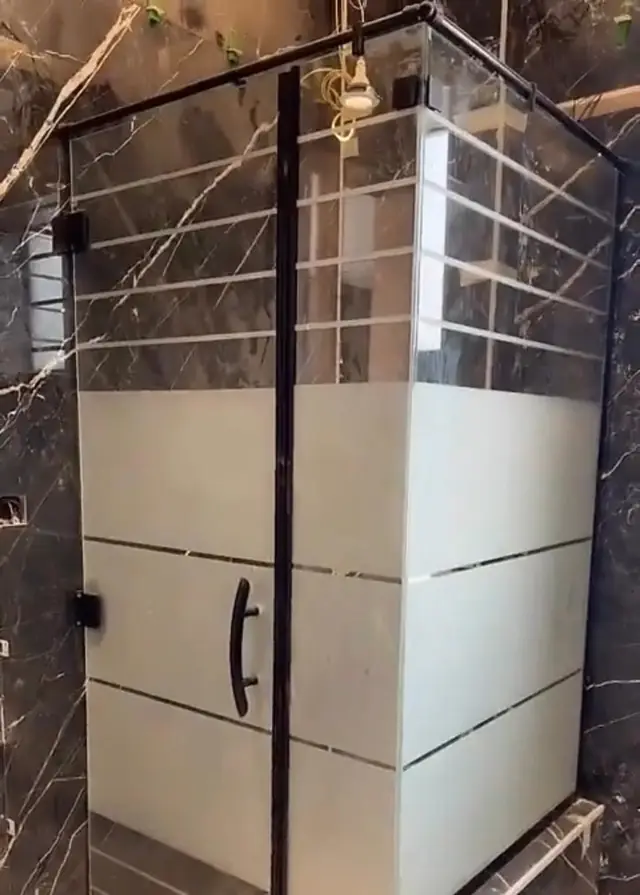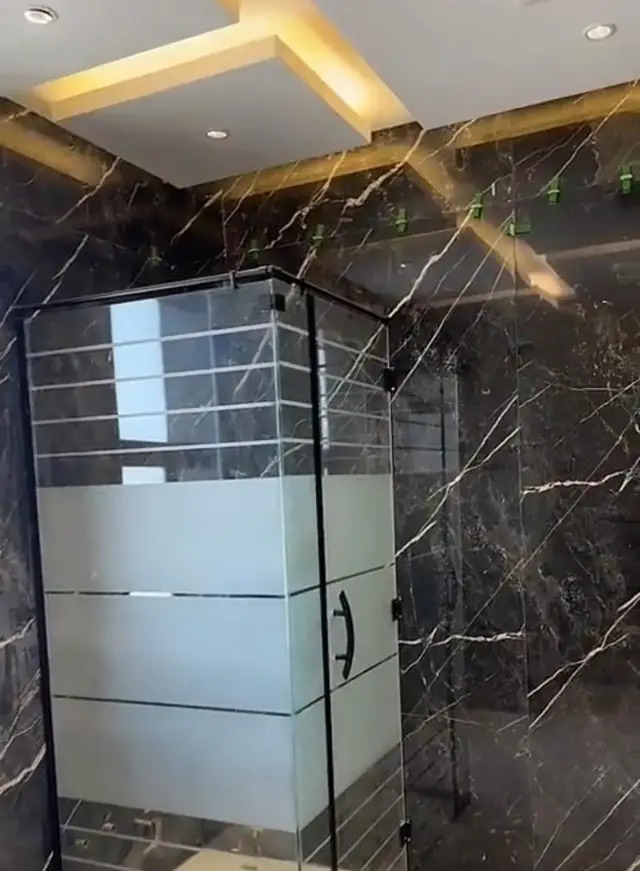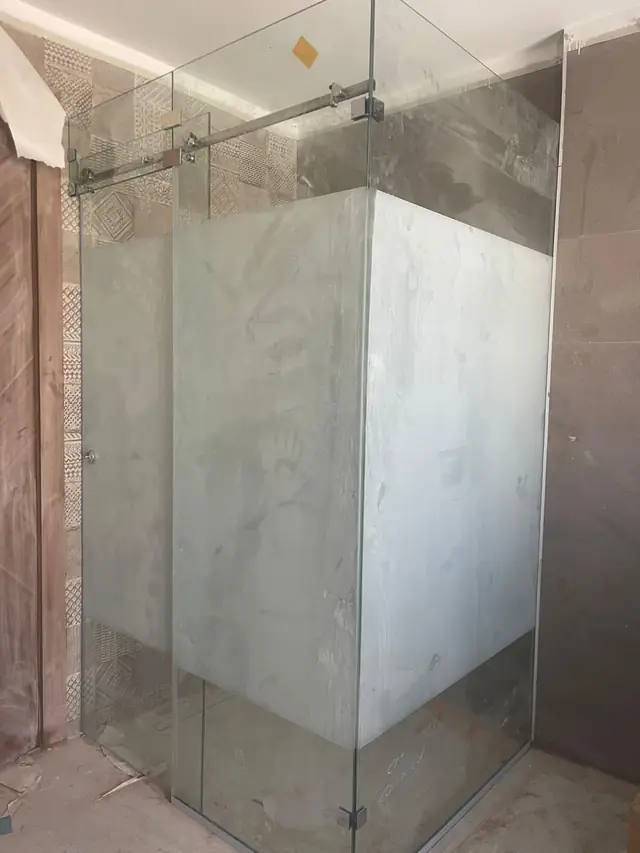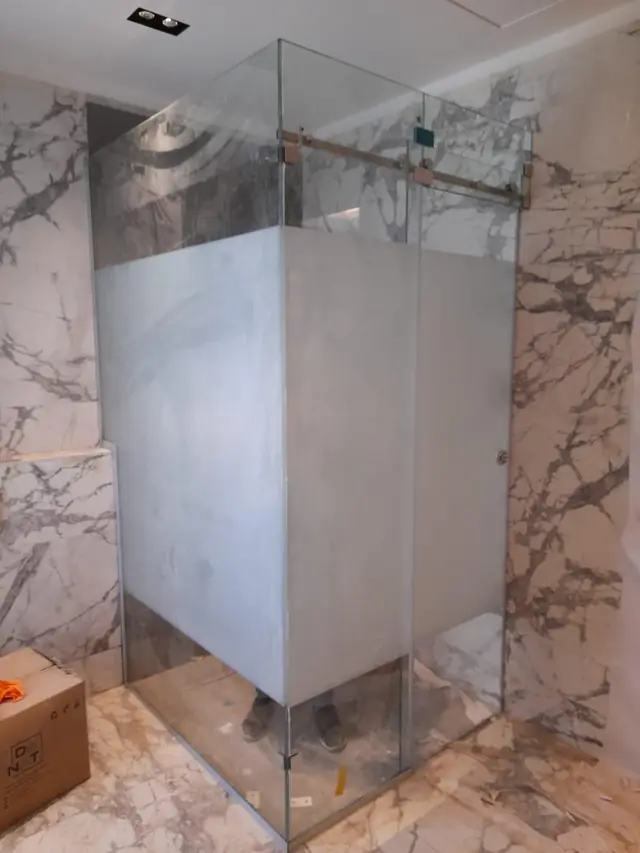
What is a glass shower enclosure and why choose it over a curtain?
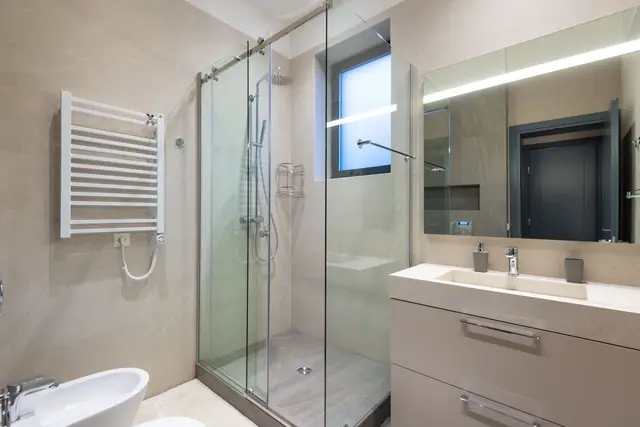
A shower enclosure is a glass partition that defines the bathing area inside the bathroom. It consists of tempered glass panels and a door, plus hardware, seals and sanitary silicone. Compared with a curtain, the glass stays transparent so your tiles and lighting show, it wipes clean easily, and it doesn't hold damp and mould the way fabric does. Tempered glass is the standard choice for showers because it is several times stronger than ordinary glass and, when it breaks, it crumbles into small pieces instead of large shards, as explained in our tempered glass guide. For a detailed comparison of systems and common mistakes, see the glass shower enclosure guide.
Who do we make shower enclosures for in Riyadh?
- Villas: master and guest bathrooms, often in frameless designs that suit modern finishes.
- Apartments: small bathrooms that need a system saving swing space, where a sliding door or a fixed panel with a door is often the best fit.
- Shops and offices: staff bathrooms and shower rooms in gyms and salons where repeated use must be handled.
- Renovation and fit-out: we install after the tiling is complete, or measure early and fabricate once the sizes are confirmed.
- Other glass work: if you need doors or partitions elsewhere in the home, see our tempered glass page.
What types of shower enclosures exist and which suits your bathroom?
| System | Suited to | Note |
|---|---|---|
| Frameless hinged door | Bathrooms with room for the door to swing and a clean look wanted | Needs clear swing space and hardware rated for the door's weight |
| Sliding door | Narrow bathrooms or where a door would hit a basin or toilet | The track needs regular cleaning of dirt and limescale |
| Corner with two panels or doors | Showers in the corner of a roughly square bathroom | Needs accurate wall squareness and measuring of each side |
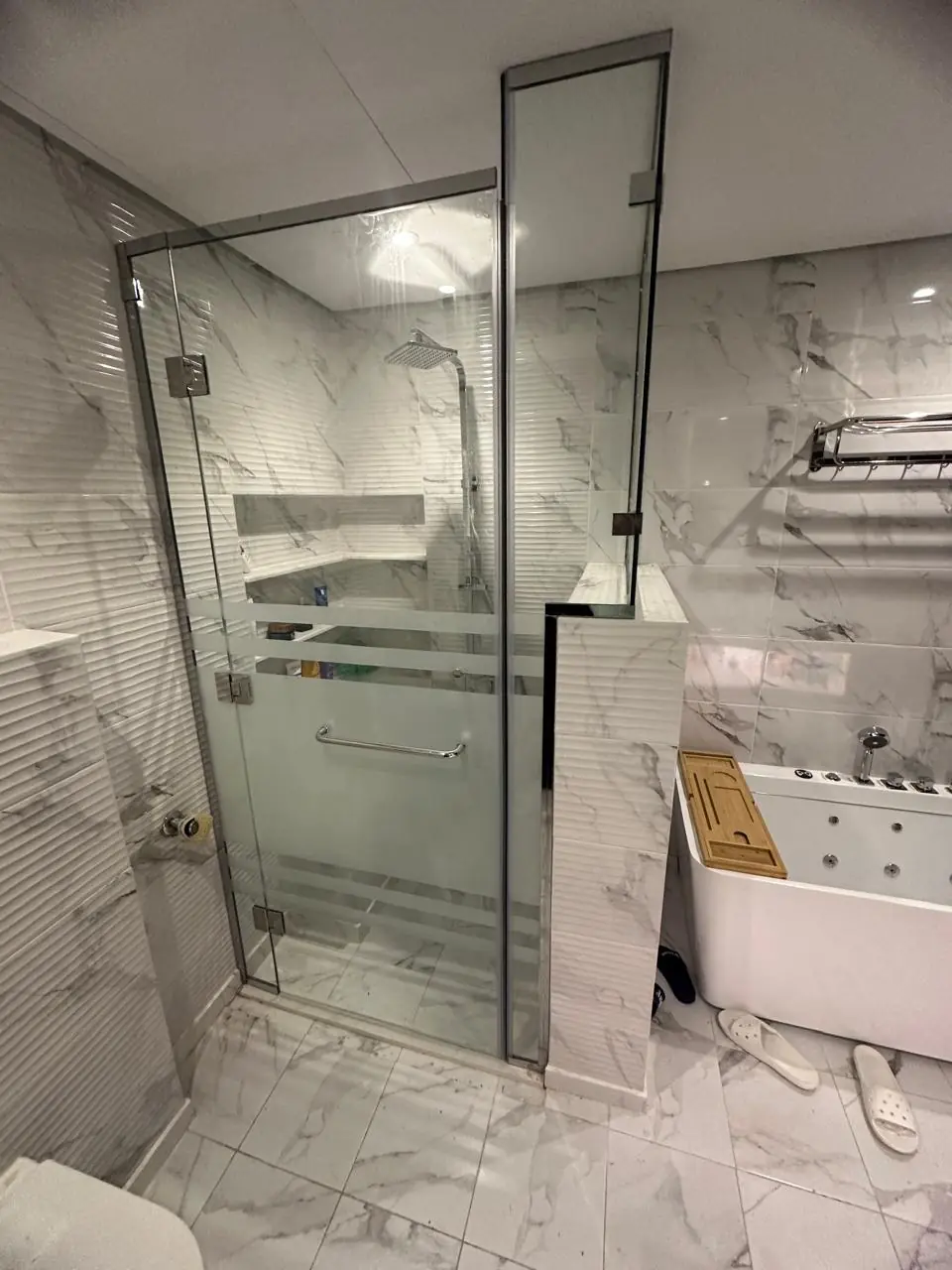
| Fixed panel + door | The most common layout for rectangular and square bathrooms | The fixed panel blocks spray and the door is for access |
| Fixed panel only (walk-in) | Larger bathrooms with an open shower area | Fewer openings but possibly more splash; set by width and shower head position |
| Slim frame | Medium sizes and walls that are not perfectly straight | The frame shows but gives more tolerance for out-of-square walls |
Sliding or hinged: how do you decide?
First ask whether the bathroom has enough width for a door to swing without hitting a basin, a toilet or the bathroom door. If so, a frameless hinged door is easier to clean because it has no bottom track. If space is tight, a sliding door saves the swing, as long as you keep the track clean. The practical comparison is in the sliding vs hinged doors article, and the final decision comes after measuring on your site. In Riyadh homes, where showers are daily and the water is hard, easy cleaning matters: the fewer tracks, corners and visible joints, the less limescale and wind-blown dust has to collect. And if the bathroom sits next to a bedroom or majlis, tinted or frosted glass can be a practical privacy choice.
What shower glass thickness is right?
| Thickness | Common use | What drives the decision |
|---|---|---|
| 8 mm | Framed systems and small to medium panels | Panel size and whether a frame supports the edges |
| 10 mm | Frameless systems and larger doors | Door weight, hinge rating and panel width |
| More than 10 mm | Very large panels or special designs | Set by size, the hardware recommendation and the supplier's standards |
How do I choose hardware and seals?
- Hardware: hinges, handles and support bars are chosen by door weight and glass thickness. See the tempered door hardware guide for the differences.
- Stainless steel: the common grades are 304 and 316. 304 is acceptable for ordinary indoor use, while 316 resists chlorides, salts and cleaning chemicals better. The difference is covered in the 304 vs 316 article. Ask the supplier for the stated grade, not just the words "stainless steel".
- Finish: chrome, brushed stainless, matte black or gold, to match the bathroom and its accessories.
- Seals: a bottom seal and side seals reduce water leakage, and the type depends on the gaps between glass, wall and floor.
- Hardware rating: check that each piece is rated for your glass thickness and door weight as stated in its data sheet.
What glass and privacy options are there for showers?
- Clear: shows the lighting and details and makes the bathroom feel larger.
- Tinted: softens transparency and gives a more private look.
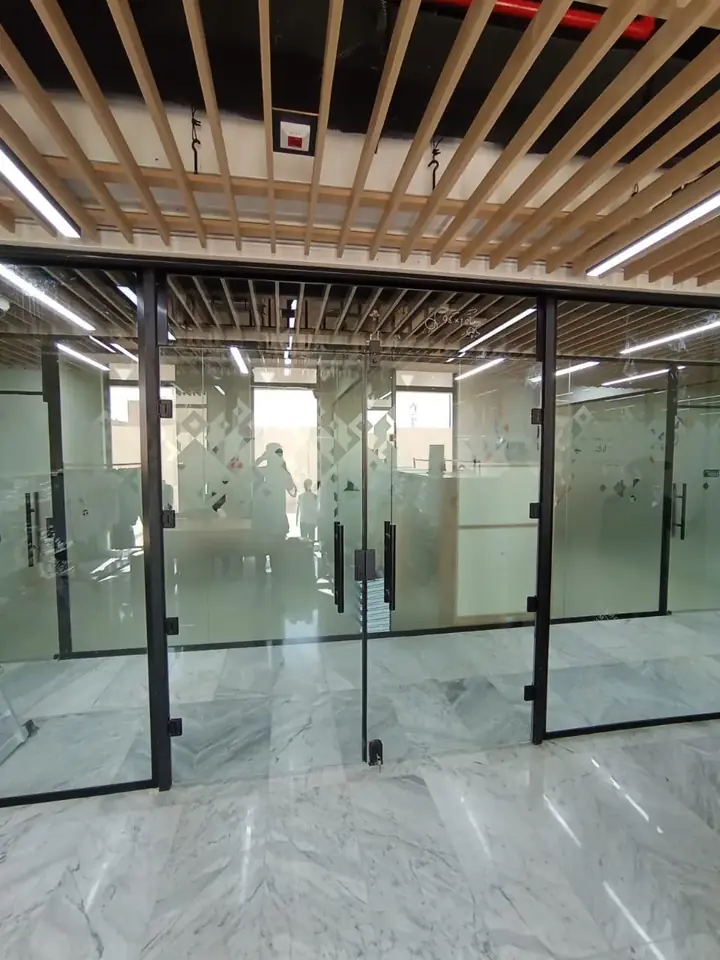
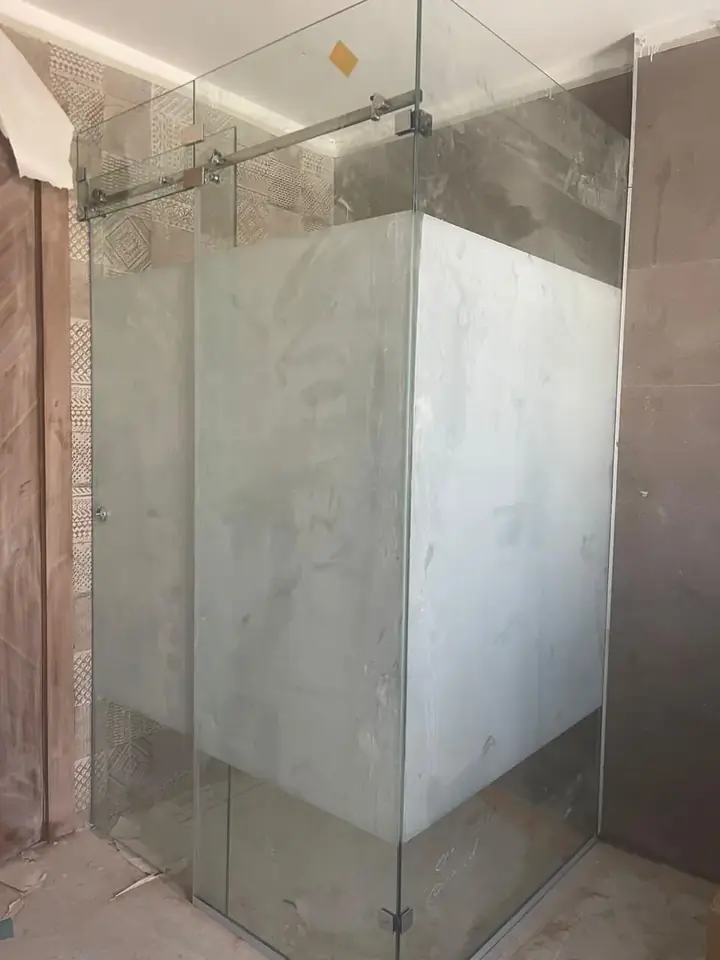
- Frosted or patterned: full or partial privacy; the options are in the privacy glass guide.
- Surface treatments: some products reduce droplet adhesion, and effectiveness varies by product, so ask for its data sheet.
- Holes and cut-outs: these are set before tempering and cannot be changed afterwards.
What affects the price of a shower enclosure?
- Size and number of panels: a larger area and more pieces cost more.
- Thickness and glass type: clear differs from tinted, frosted and patterned.
- System type: frameless, sliding or corner, and the number of hinges and support pieces.
- Hardware: stainless grade, finish and brand.
- Seals and treatments: their type and any added surface treatment.
- Site conditions: floor level, access and any adjustments needed to the wall or floor.
- For more detail see how tempered glass is priced. We don't quote numbers before inspection; we send a written, itemised quote after measuring.
How do we deliver a shower enclosure from measuring to handover?
- Site measurement: we measure several points on each side because bathroom walls are rarely straight, and check the floor slope, ideally after the tiling is complete. See the measuring guide.
- Written, itemised quote: clear lines for glass, hardware, seals and installation.
- Fabrication to size: the glass is cut, drilled and finished before tempering, then tempered to the approved sizes.
- Installation: with a spirit level and fixing suited to the wall type, adjusting the door and seals and applying sanitary silicone. The stages are covered in the stages of a glass project.
- Handover: we check door movement and seal tightness and hand over a clean bathroom with usage tips.
What are the common shower enclosure mistakes?
- Measuring before the tiling is finished: the real size changes after finishing.
- Ignoring floor slope: water collects at the door and escapes the enclosure.
- Hardware weaker than the door's weight: the door sags, rubs the floor or wall and stresses the glass at the edge.
- Removing the bottom seal for looks: leakage increases.
- Unsuitable silicone, or using the shower before it dries: it cracks or grows mould. Follow the drying time in the product's data sheet.
- Hanging things on the door and handle: towels and weight strain the hinges and edge.
How do I clean and maintain a shower enclosure in Riyadh?
- Wipe the glass with a squeegee after use, because Riyadh's hard water leaves white limescale when it dries on the glass. Safe removal methods are in the limescale article.
- Use a gentle cleaner and a soft cloth, and avoid abrasives, blades and harsh chemicals that damage seals and finishes.
- Clean the sliding track and seals regularly, and check hinges and tighten any that loosen.
- Deal with any rubbing or looseness early rather than postponing it.
- For a general schedule see the glass and aluminium maintenance guide.
What do we need from you for an accurate quote?
- Clear photos of the bathroom and shower area from several angles.
- Approximate width and height, and where the basin, toilet and door are.
- Whether there is a bathtub or only a shower floor, and whether the tiling is complete.
- Your preferred system (hinged, sliding or corner), finish and color.
- The privacy level and glass type you want.
- The project location in Riyadh and a suitable time to visit.
What questions should you ask any shower enclosure supplier?
- Does the quote cover measuring, fabrication and installation, itemised line by line?
- Is the glass truly tempered, and what thickness is proposed and why?
- What stainless grade and hardware finish is used, and what rating is stated for the hinges?
- Which seals are used, and how is floor slope handled?
- What silicone is used, and how long must it dry before the shower is used?
- How is any change charged if dimensions differ at installation?
- What is the lead time, and how are inspection and handover done? See also the contractor checklist.
Summary
A good shower enclosure comes from accurate measuring after the tiling is done, tempered glass of suitable thickness, hardware of the right grade and rating, and seals and silicone that control water. This is general guidance, and the final decision comes after measuring on your site. Send us photos and dimensions of your bathroom on WhatsApp and we will arrange a visit and send an itemised written quote. If you have children at home, see the child safety guide.
How we work
Get in touch
Send us a photo and a short description on WhatsApp.
Visit & measure
Our technician visits your site and takes the measurements.
Written quote
Materials, timeline and price in writing before any fabrication.
Fabricate & install
We build, install and leave your site clean.
We don't publish a generic price per metre: every project differs in thickness, hardware and installation, so we give you a written quote after the site visit.
FAQ: Shower Enclosures
What is the best thickness for a shower enclosure?
As guidance, 8 mm for framed systems and small sizes, and 10 mm for frameless systems and larger doors. The final decision comes after measuring, based on size and hardware.
Does a frameless shower leak?
Some drops can escape at the joints if seals and floor slope aren't accounted for. A good design cuts leakage significantly but can't eliminate it entirely.
Can the enclosure be installed after the tiling is finished?
Yes, and that is preferred, once the finishes are complete and the walls and floor are confirmed straight.
Is the glass always tempered?
Yes, we use tempered glass for showers. Tempered glass can't be cut or drilled after tempering, so we measure precisely before fabrication.
Stainless 304 or 316 for the hardware?
304 is acceptable in ordinary indoor bathrooms, while 316 suits salts, chlorine or strong cleaners better. We outline the options in the quote.
How do I remove limescale from the glass?
Wipe after every use, use a suitable cleaner as the supplier recommends, and avoid abrasives. See the limescale article for details.
What if the door sags or rubs?
Contact us to inspect it. It is usually fixed by adjusting the hinges or replacing a part, and it shouldn't be postponed because rubbing stresses the glass edge.
How do I request a quote?
Send photos of your bathroom, approximate dimensions and your location on WhatsApp. We arrange a site measurement, then send an itemised written quote.